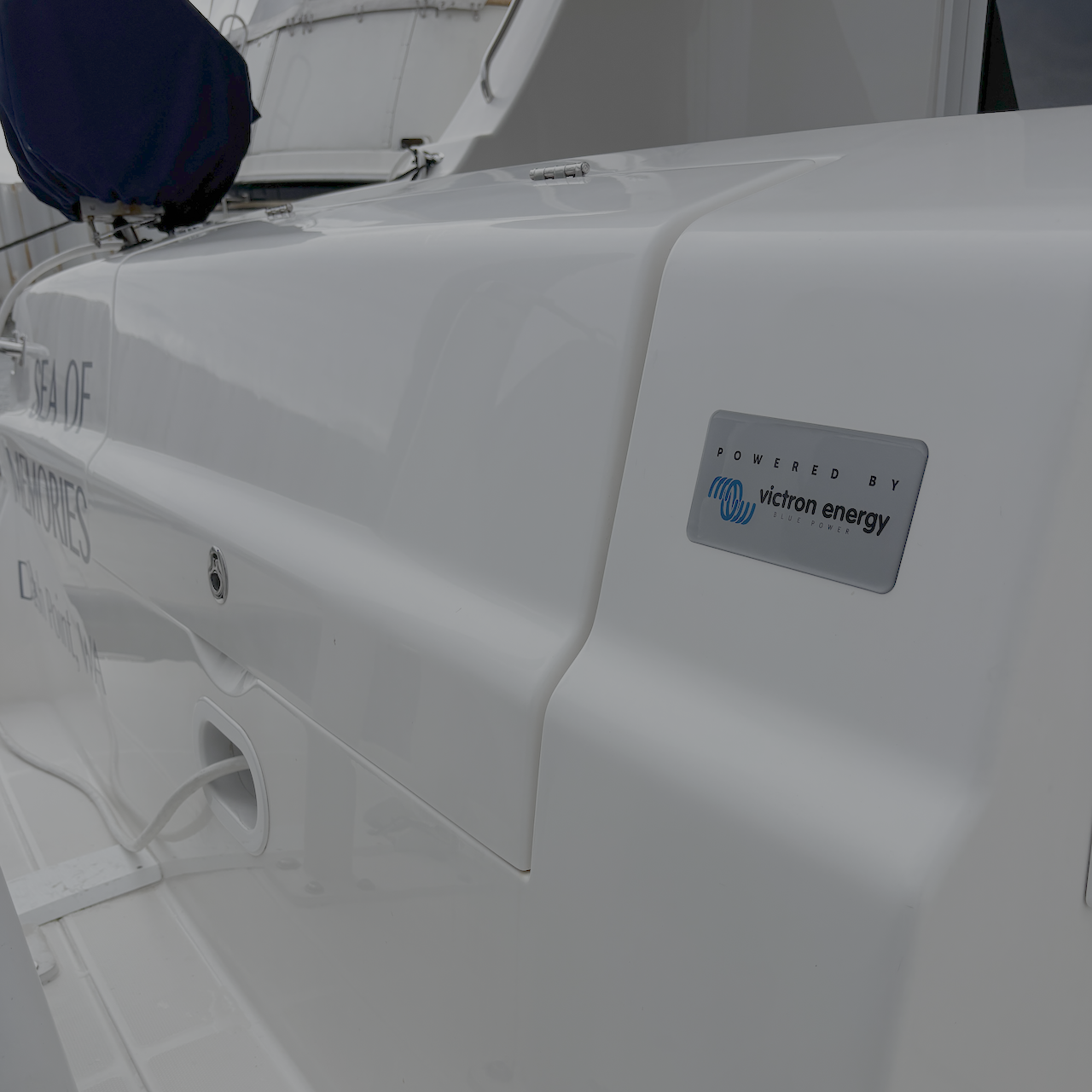
Ever since we purchased Sea of Memories, we envisioned a smarter, modern power system. A system built around seamless, reliable, and automated operation of all power sources onboard. A system that brings together the strengths of Sea of Memories – a 7.2 kWh 12v DC house battery bank, 8 kW 120/240v AC generator and two 105A 12v DC alternators. While all do their job well, each are effectively standalone and lack integration into a clean and seamless system. And because she takes so many families each summer throughout the San Juan and Gulf Islands, this system had to be reliable, simple, and safe.
This off-season, after a year and three iterations of design, we set out to bring one of the most sophisticated electrical systems to a charter yacht in this size range. We had to look no further than Victron Energy – the world leader in off-grid and mobile power solutions. The final design of the system aimed to accomplish 4 goals:
Uninterrupted 120v AC power, provided by a ~3 kW inverter/charger, with faster re-charge times
Ability to use the system to seamlessly supplement shorepower, especially during the Winter with the cold mornings
Fully integrated, automated and condition-based source and load management using all available charge sources
Integrated control and display throughout the vessel, with the Garmin chartplotter and from anywhere in the world
System Design and Layout
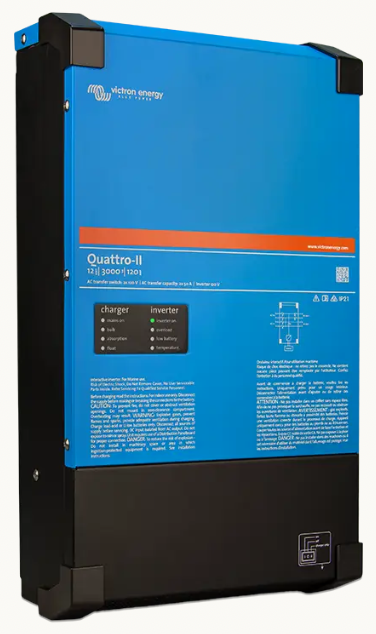
To achieve all of these goals, we decided that the heart of this system would be the newly released Victron Quattro-II. The Quattro is similar to the popular Multiplus-II, but features an incredible UPS-grade (<20ms) transfer switch that allows for complete integration and control of both generator and shorepower sources, with seamless transfer between. Paired with Victron’s Cerbo Gx and 7” touchscreen, we were able to achieve almost complete automation out of the box from Victron, with some of the more advanced automations involving just a little coding in Node Red. Absolutely incredible.
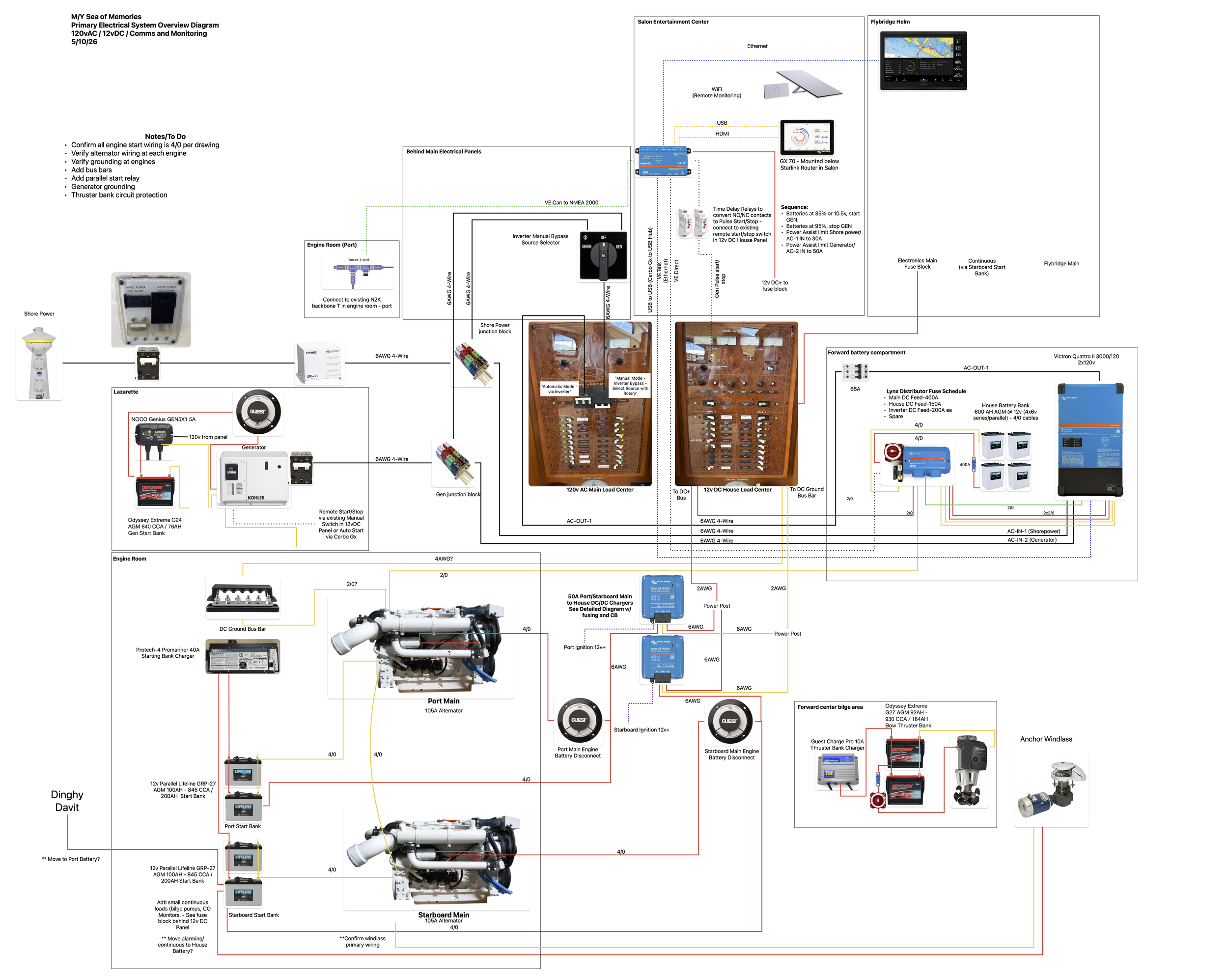
As-Built of Sea of Memories 2026 Electrical Overhaul - Click for PDF
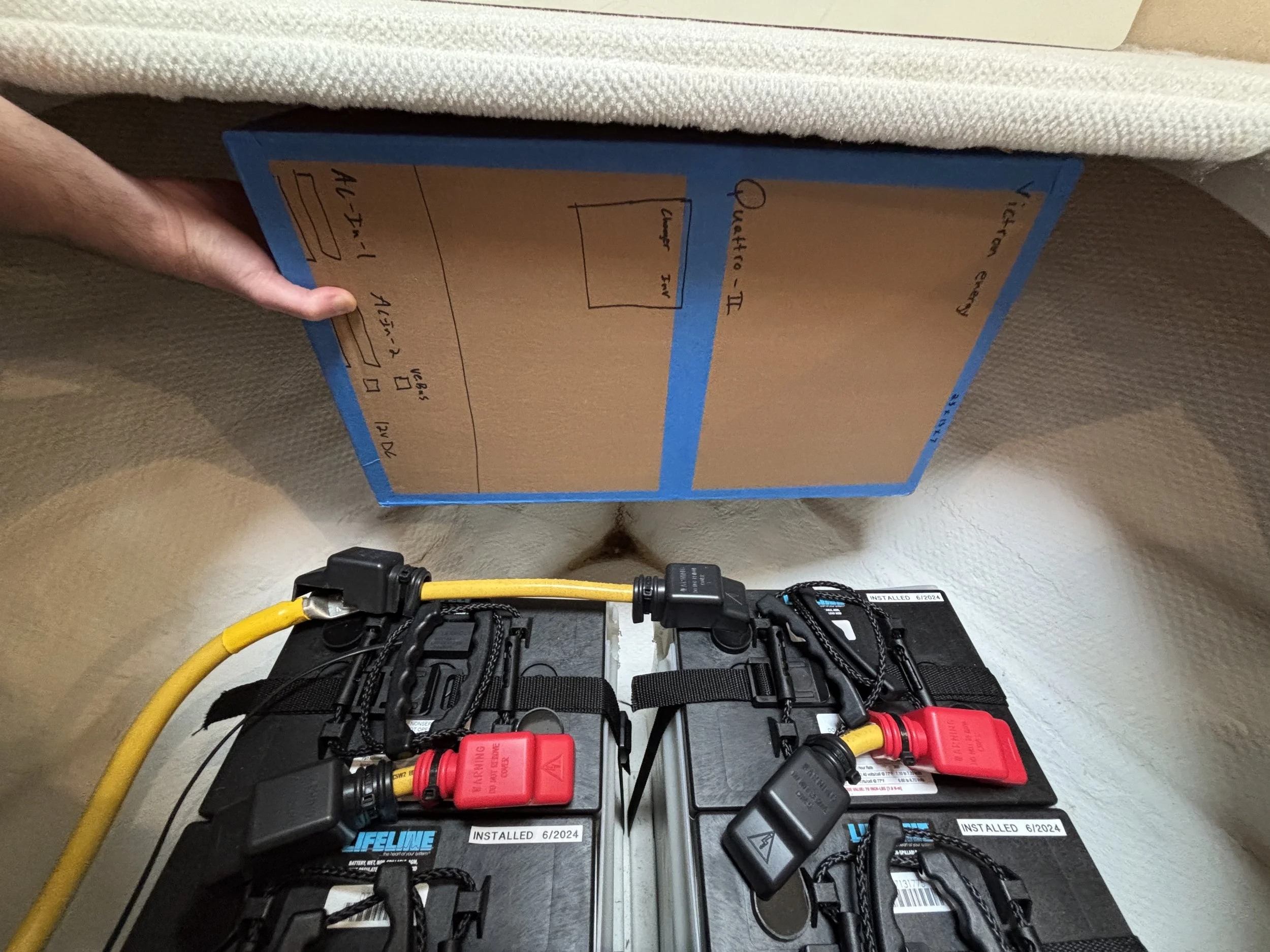
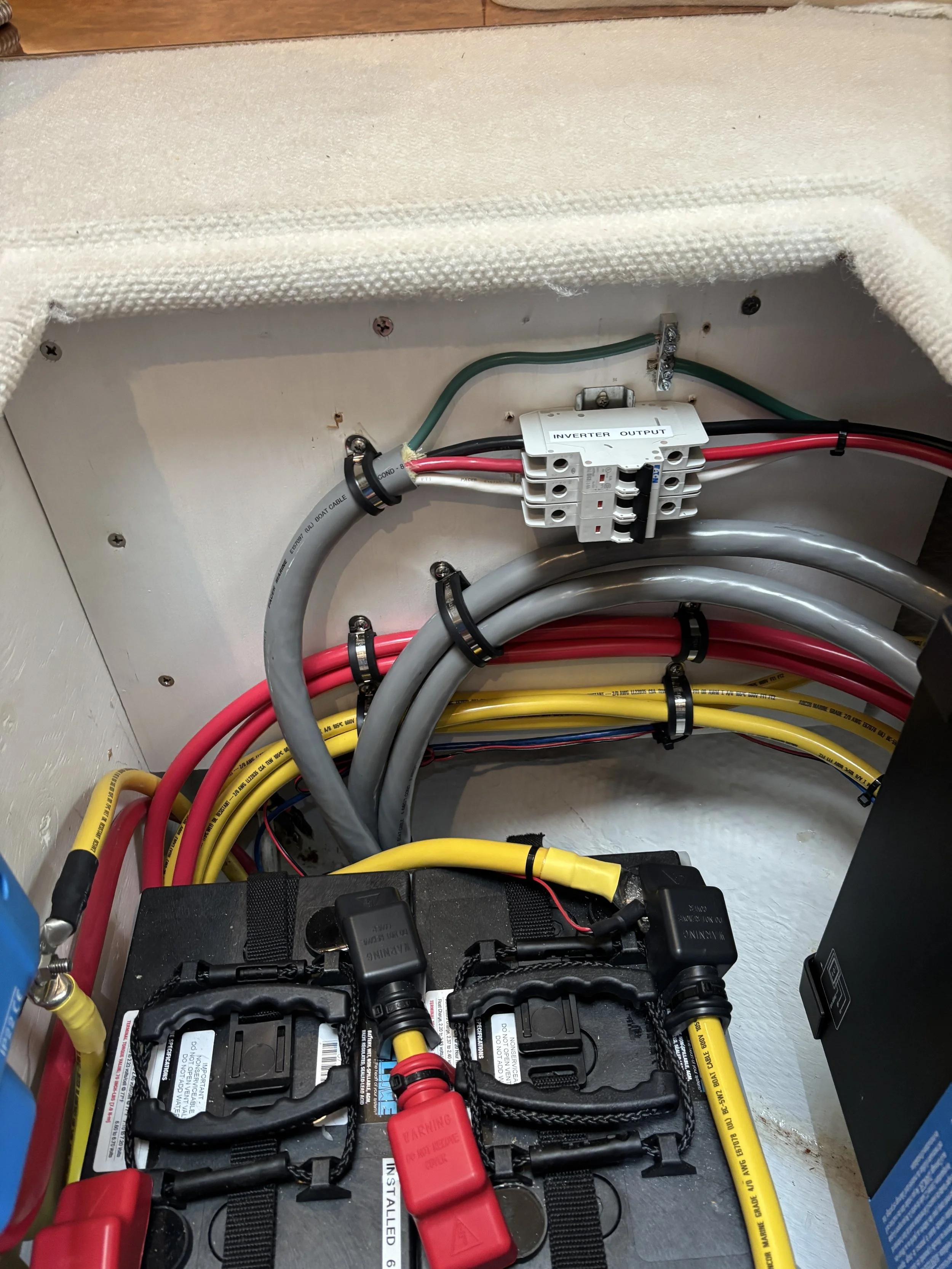
One of the more difficult decisions was deciding where to install the Quattro. It’s not a particularly small or light unit and must be within a few feet of the battery bank to keep the DC cables short. Since this unit would be pulling around 300A DC in peak, our minimum cable size we expected were parallel 2/0 cables. We were really trying to avoid parallel 4/0’s. We settled on installing a new bulkhead in the bow house battery storage locker to mount the unit sideways. While this kept the DC runs short, this location meant we would need to install 3 cables worth of 6AWG wire for the shore power, generator, and inverter output feeds. These 3 cables had to run from the back of the boat at the 120V load center to the Quattro. More on this later…
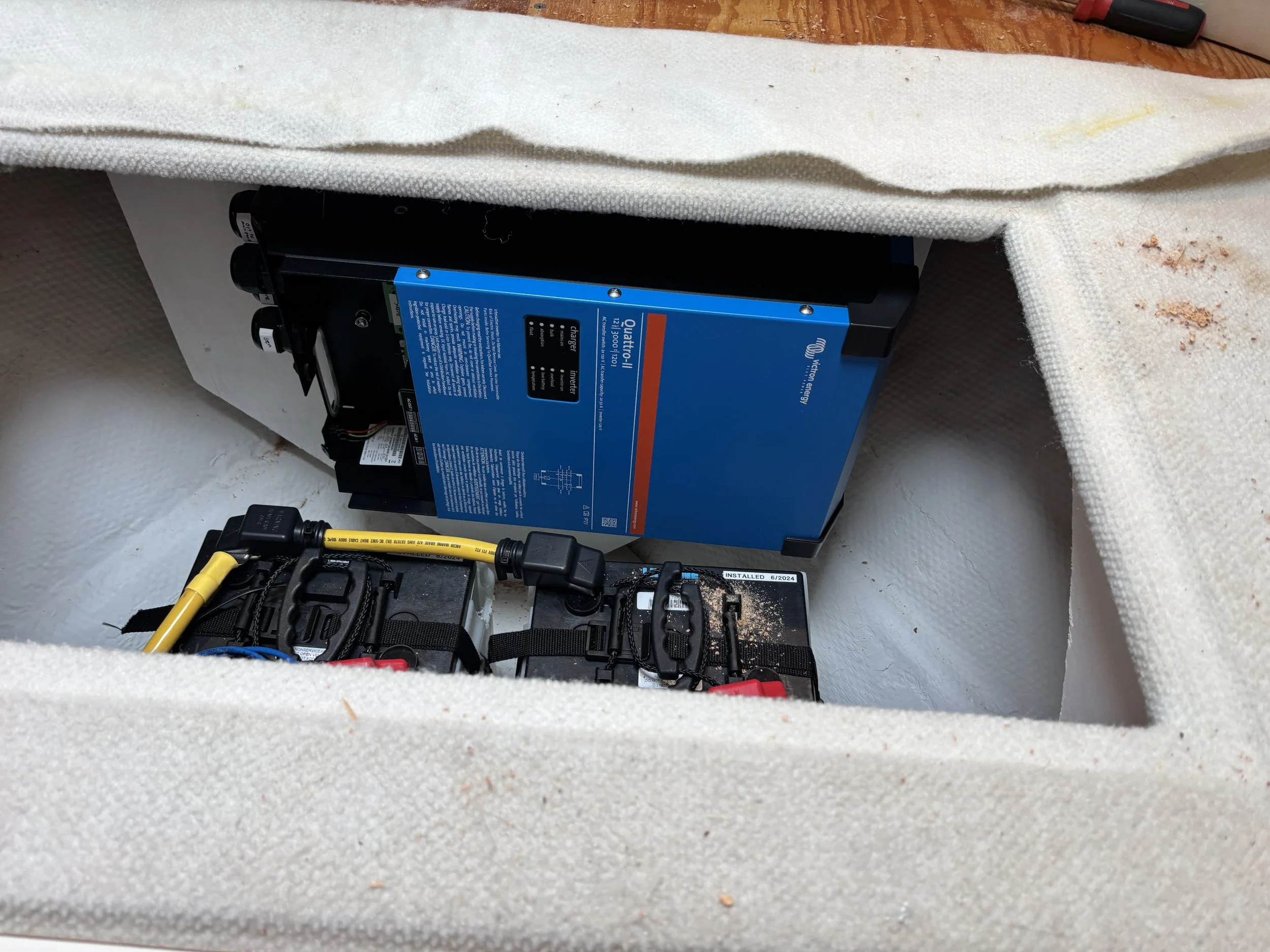
This system has dramatically reduced recharge time for the house battery bank, providing 4.5x more charging capacity. With Victron DVCC, the Quattro-II inverter/charger and the two Orion XS DC-DC chargers all work together to provide up to 220A of DC charging vs the original 50A charger.
Wire-Wire-Wire
With the Quattro location finalized and installed, we began building the new DC system. First, the existing house battery cabling all had to be replaced and upsized to handle the demands of the Quattro. The existing 2/0 battery interconnect cables were replaced with 4/0 cables. A new 400A T-fuse, battery disconnect switch, and Victron Lynx Distributor were installed to provide the necessary foundation for the DC system. This also provided for the necessary fusing to ensure the high current DC cables were protected. Several days were spent meticulously arranging the DC cabling, ensuring all cables were equal length and terminated with premium heavy duty lugs. Every connection was cleaned with alcohol and torqued to spec.
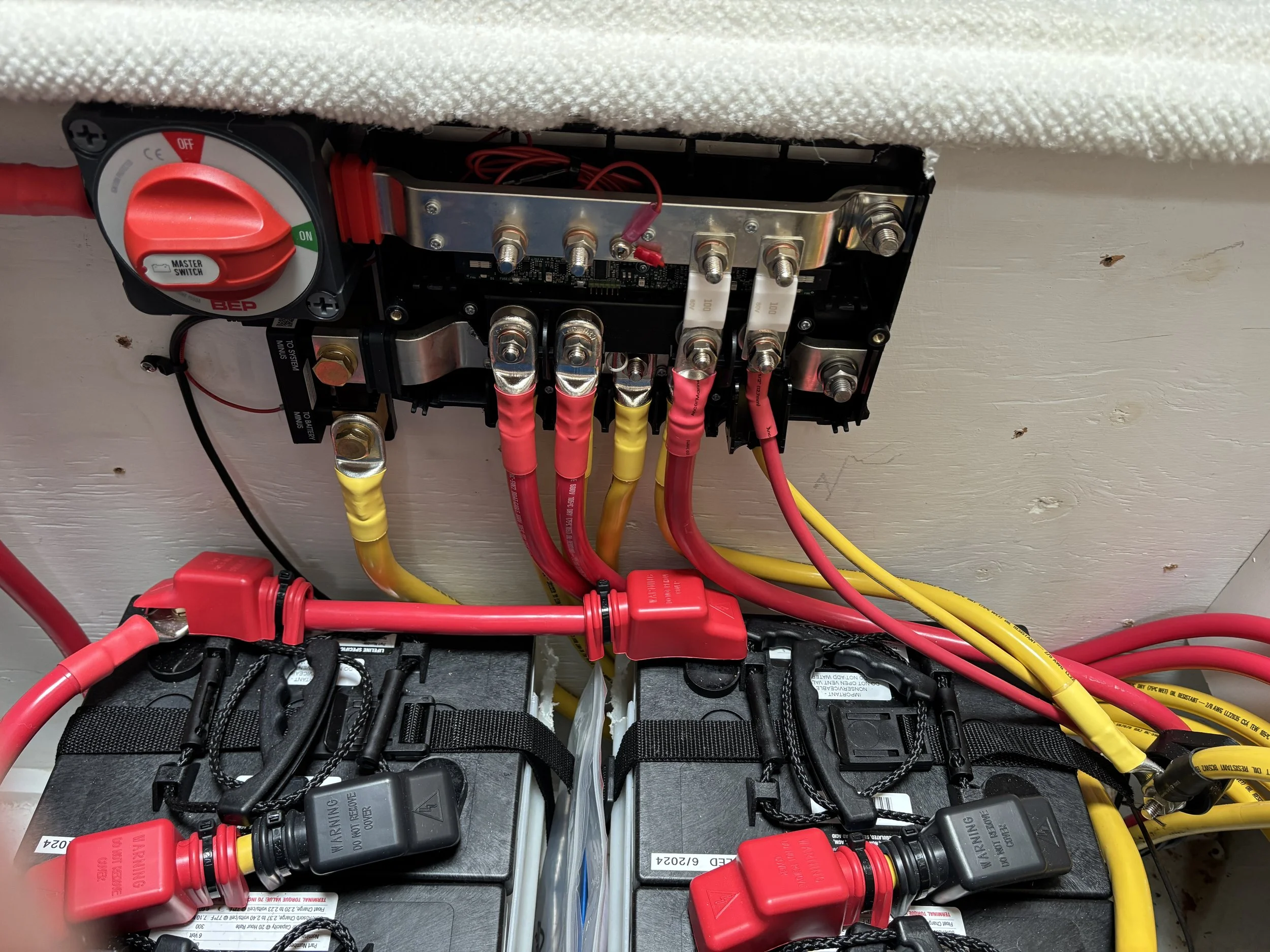
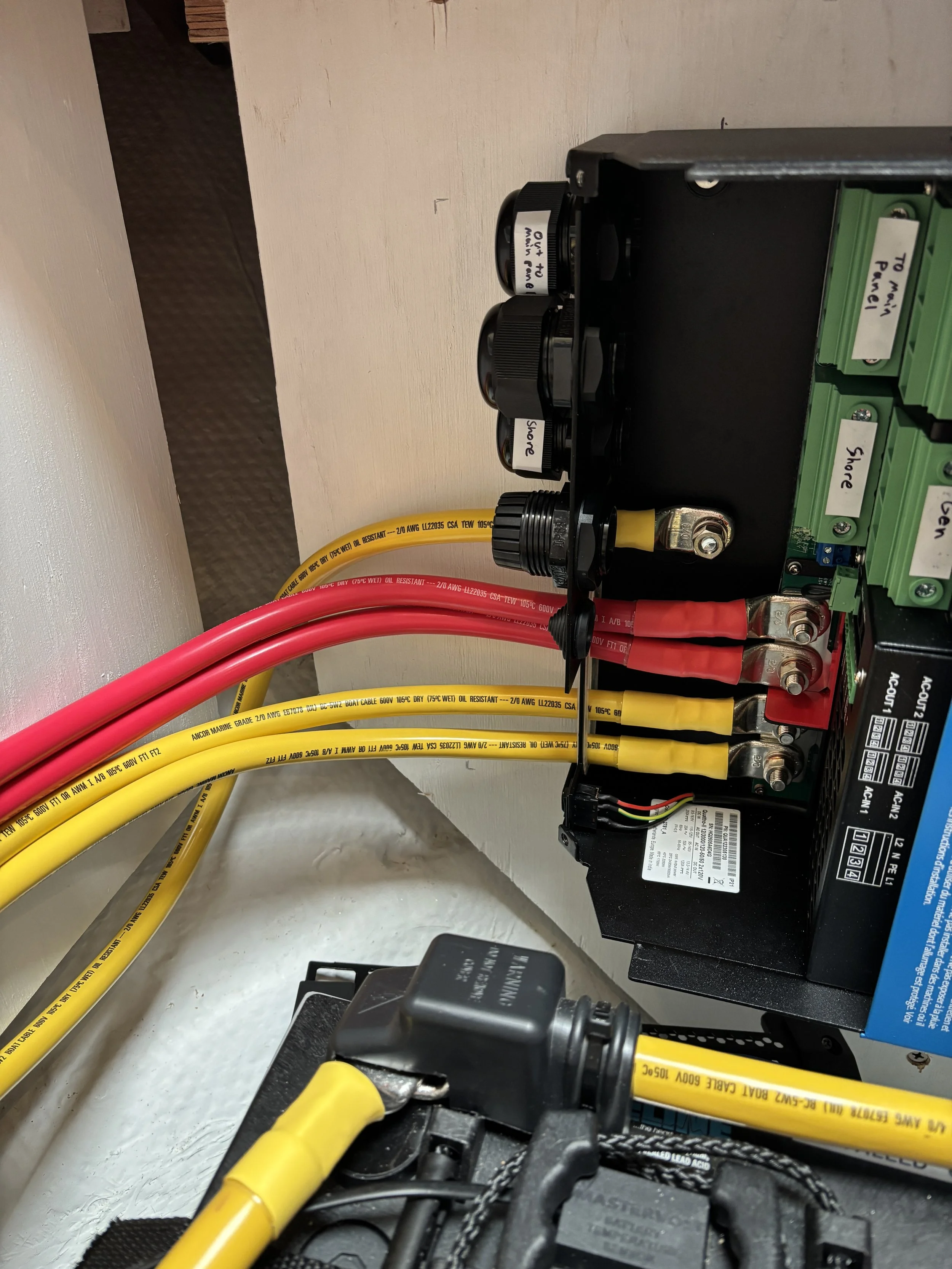
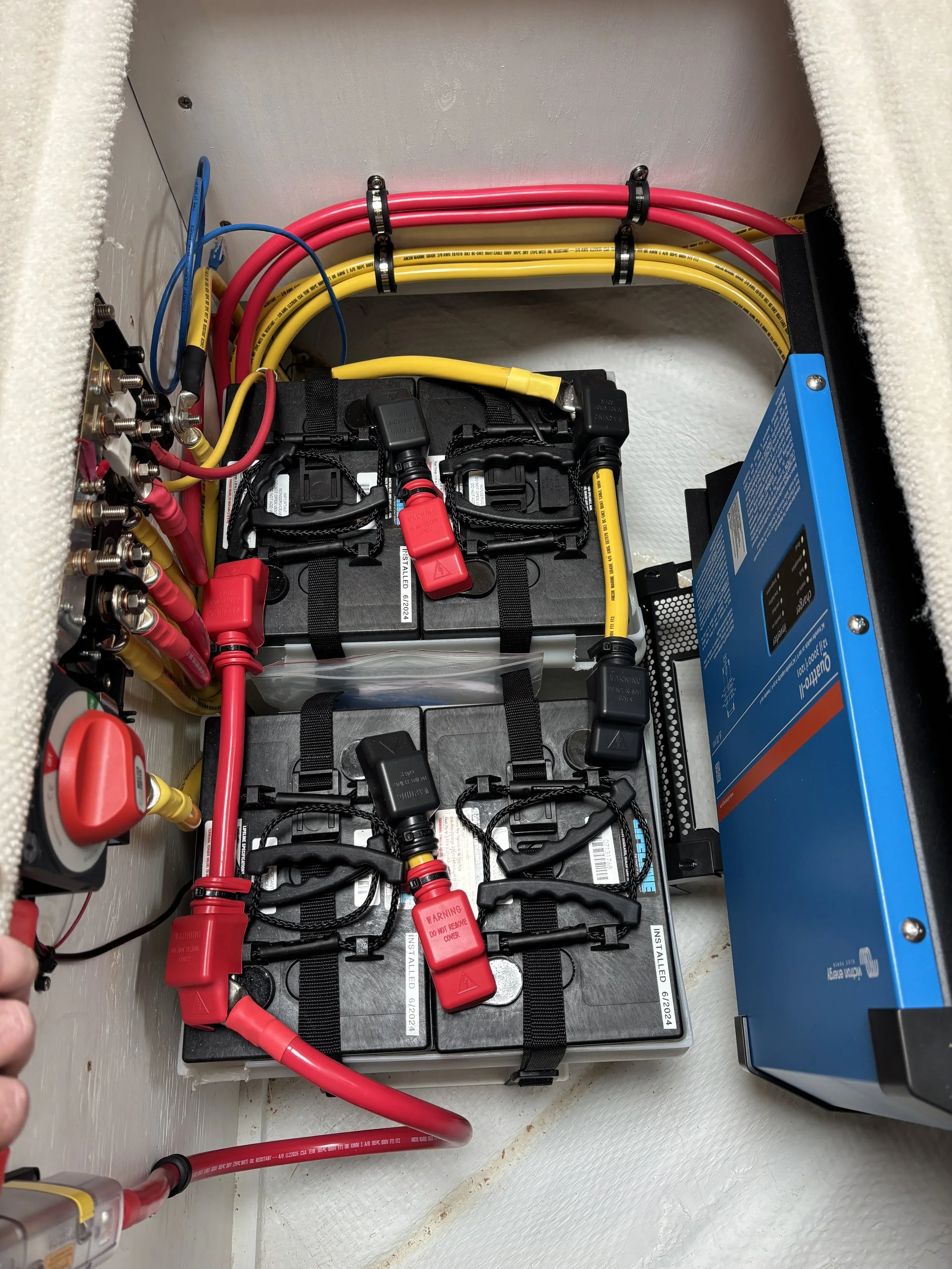
Epic cable run
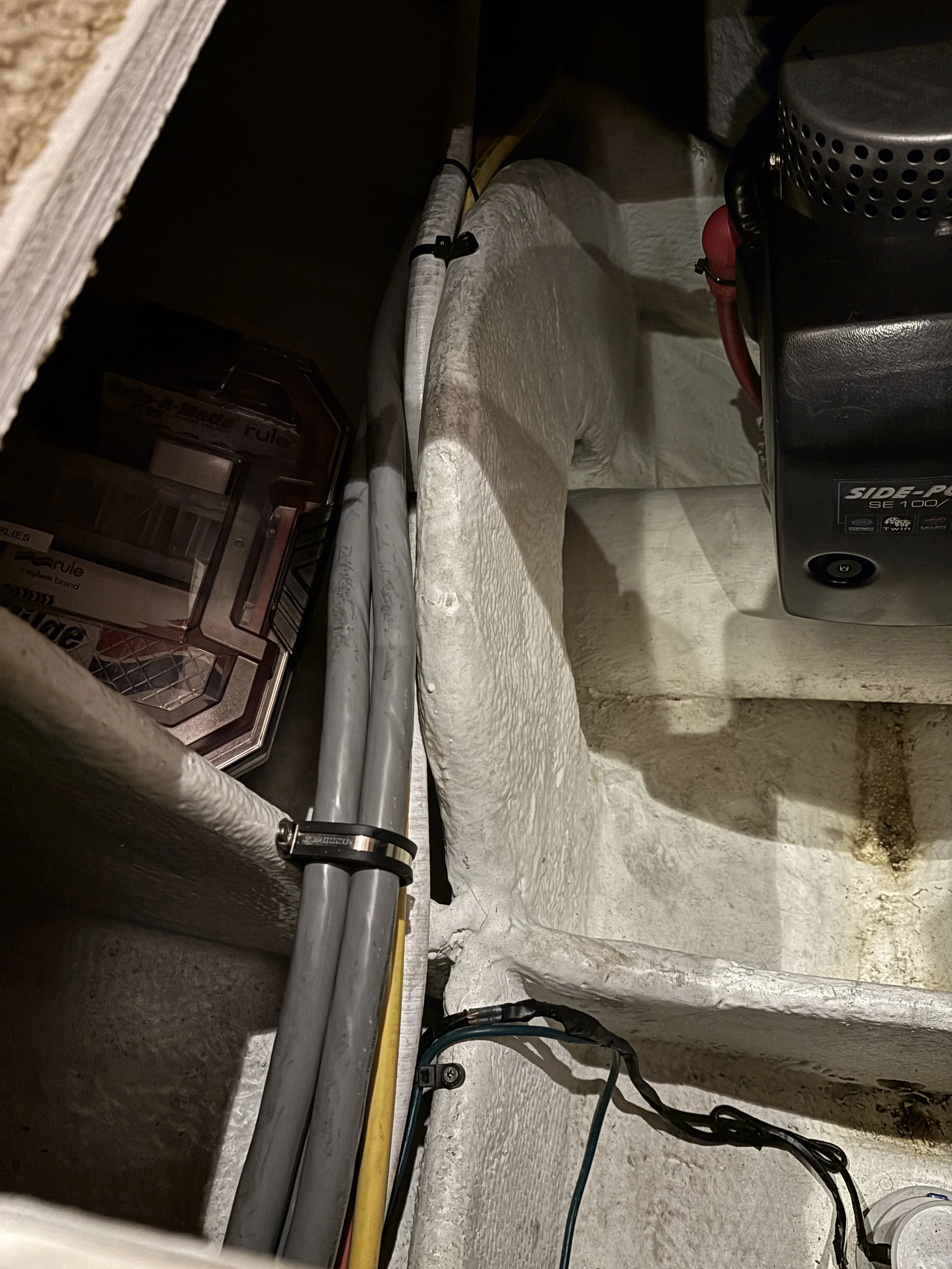
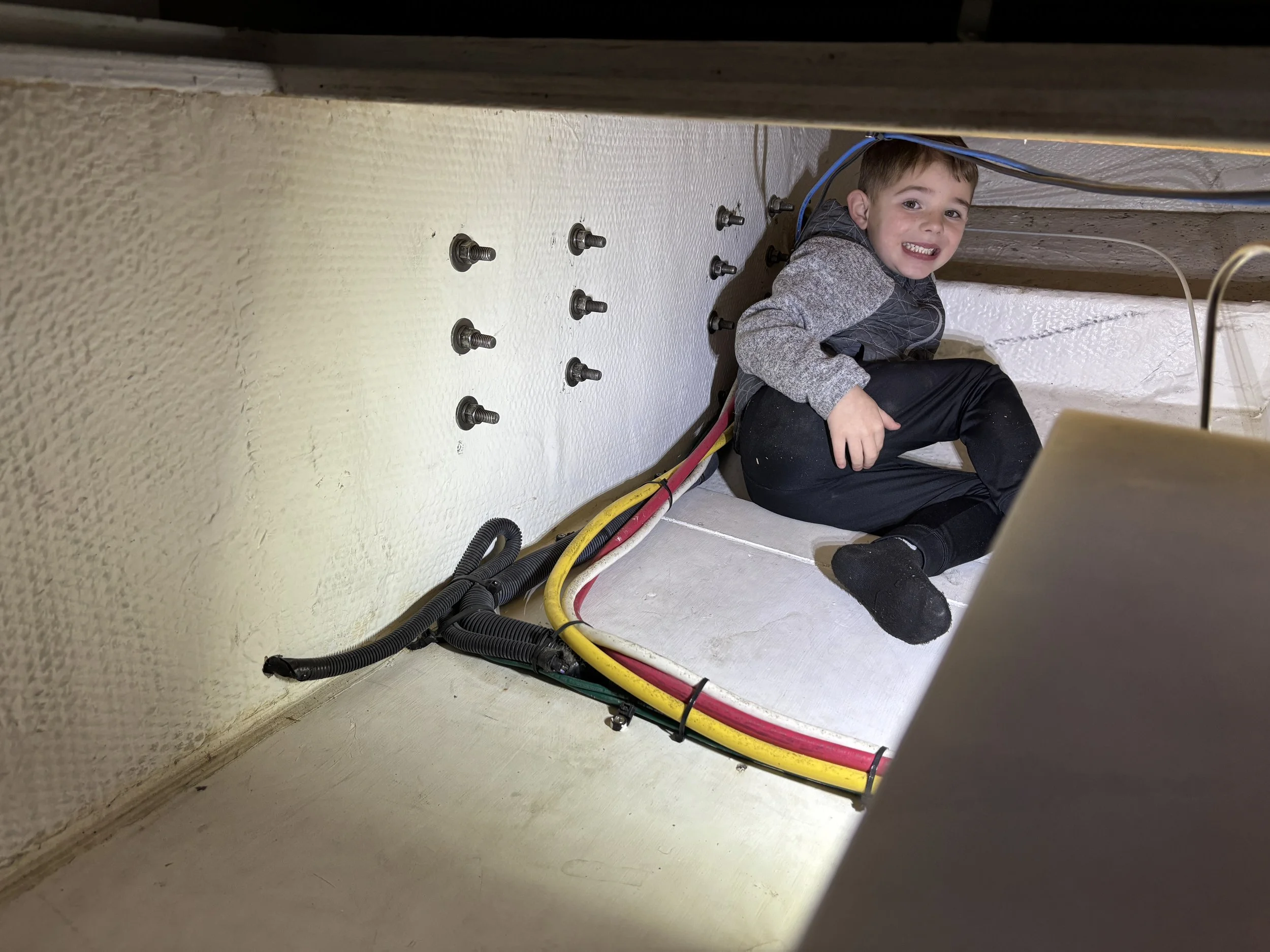
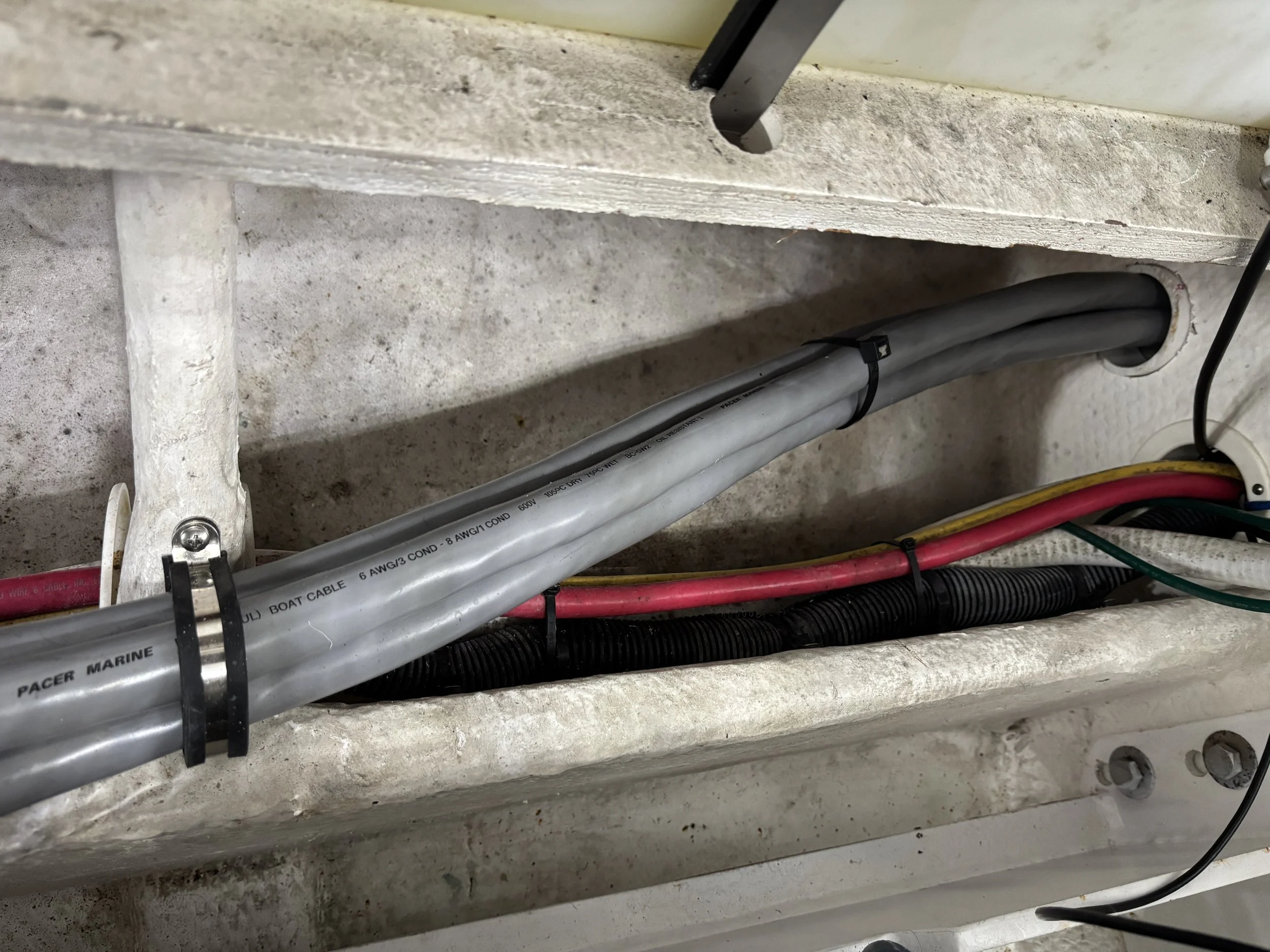
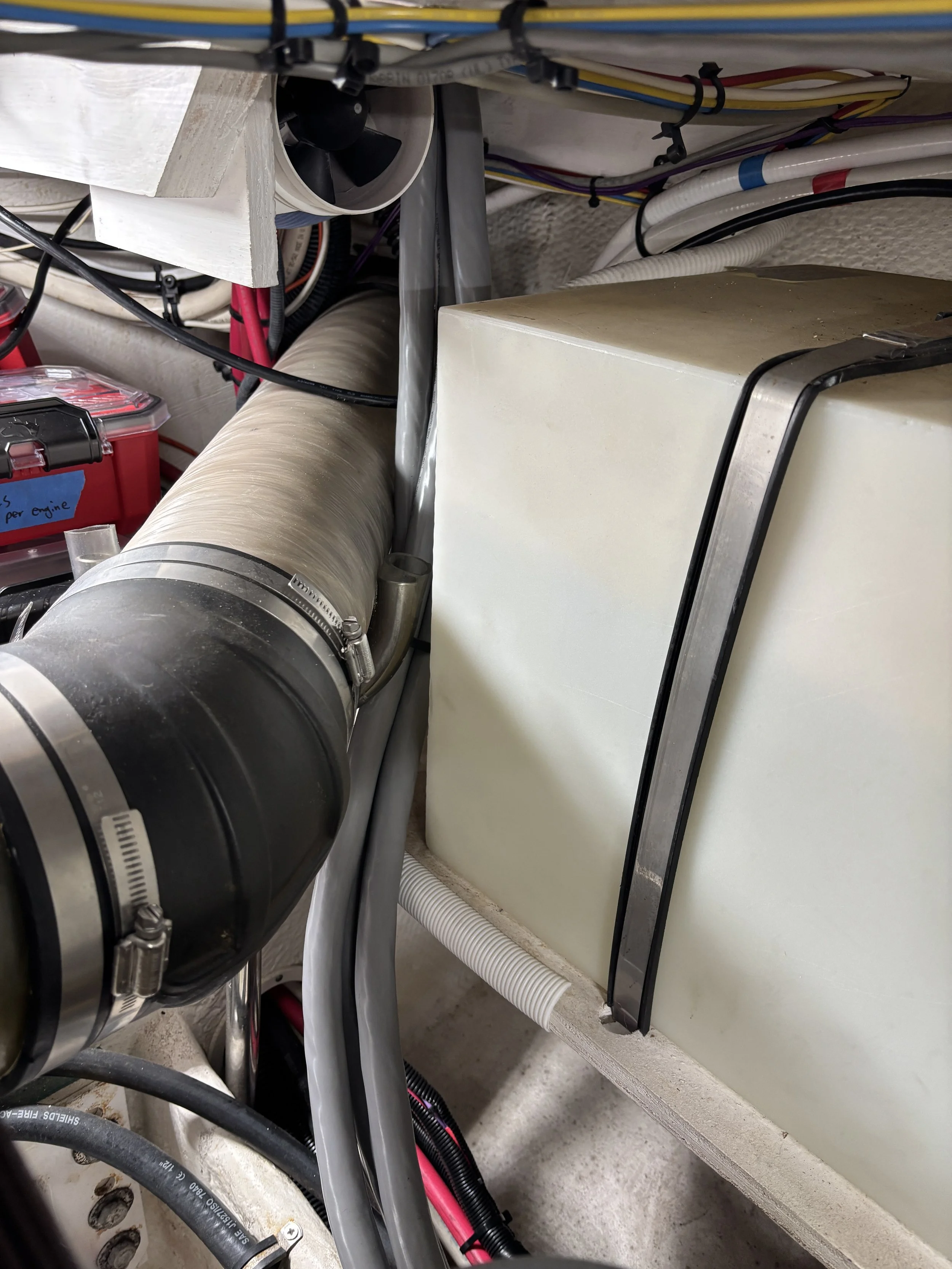
With the DC side of the installation complete, the next phase was to complete the dreaded 120v AC cable run for the shorepower and generator inputs to the inverter along with the 120v AC inverter output. These 3, 4 conductor cables, each about 1” in diameter, had to be pulled through the entire bilge. From the back of the existing 120v AC load center, down into the engine room, through the main bulkhead of the engine room into the fwd bilge, through 3 more bulkheads, and up into the battery compartment. This cable pull took 2 days, several hole saws, and one tiny dude to help with the pull in some tights spaces.
With 2.4 kW continuous/ 5.5 kW peak power, the system has no problem running heavy loads such as the reverse cycle HVAC system to keep Sea of Memories cool in the summer and warm in the winter.
Core Principle, Reliability and Backup Plans
In order to accomplish our goals as set out above, we made the decision early on that all 120v AC loads would be routed through the Quattro. While this presented greater risk to running large loads that could quickly discharge the batteries or overload the inverter, this was necessary to ensure we could take full advantage of Victron’s PowerAssist functionality for all AC loads on the vessel. Additional automations and protections would be put in place to safeguard the system.
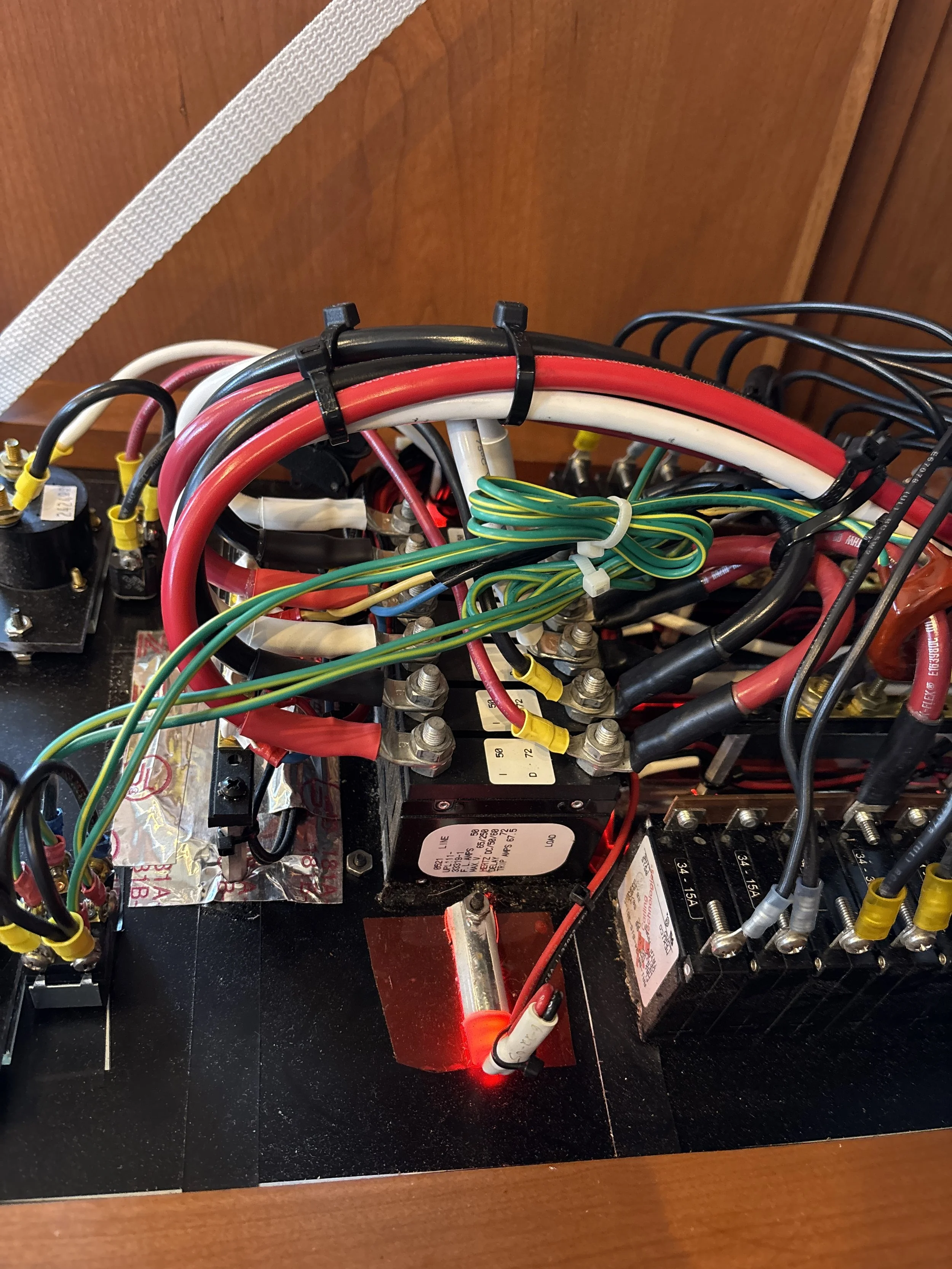
In order to achieve this, the interlocked shorepower and generator feeds to the 2, 50A main breakers on the 120v AC load center, were disconnected and these breakers re-purposed. These existing feeds were brought into a new termination block. From this block, a shorepower feed and generator feed were taken both to the new Quattro (via those 2, 1” cables mentioned above) and to a manual transfer switch. The output of that transfer switch was brought back to the old interlocked generator main breaker – now designated as the ‘Manual Inverter Bypass’ breaker. The inverter 120v AC output was brought back to the old shorepower breaker - now designated as the ‘Automatic via Inverter’ breaker. By doing this, the inverter output (whether it is bypassing and providing shorepower, generator, or inverting from the batteries) is the primary feed supporting all 120v AC loads. These loads are all measured and accounted for via the Quattro’s built in metering and take advantage of the instantaneous transfer switch when switching sources.
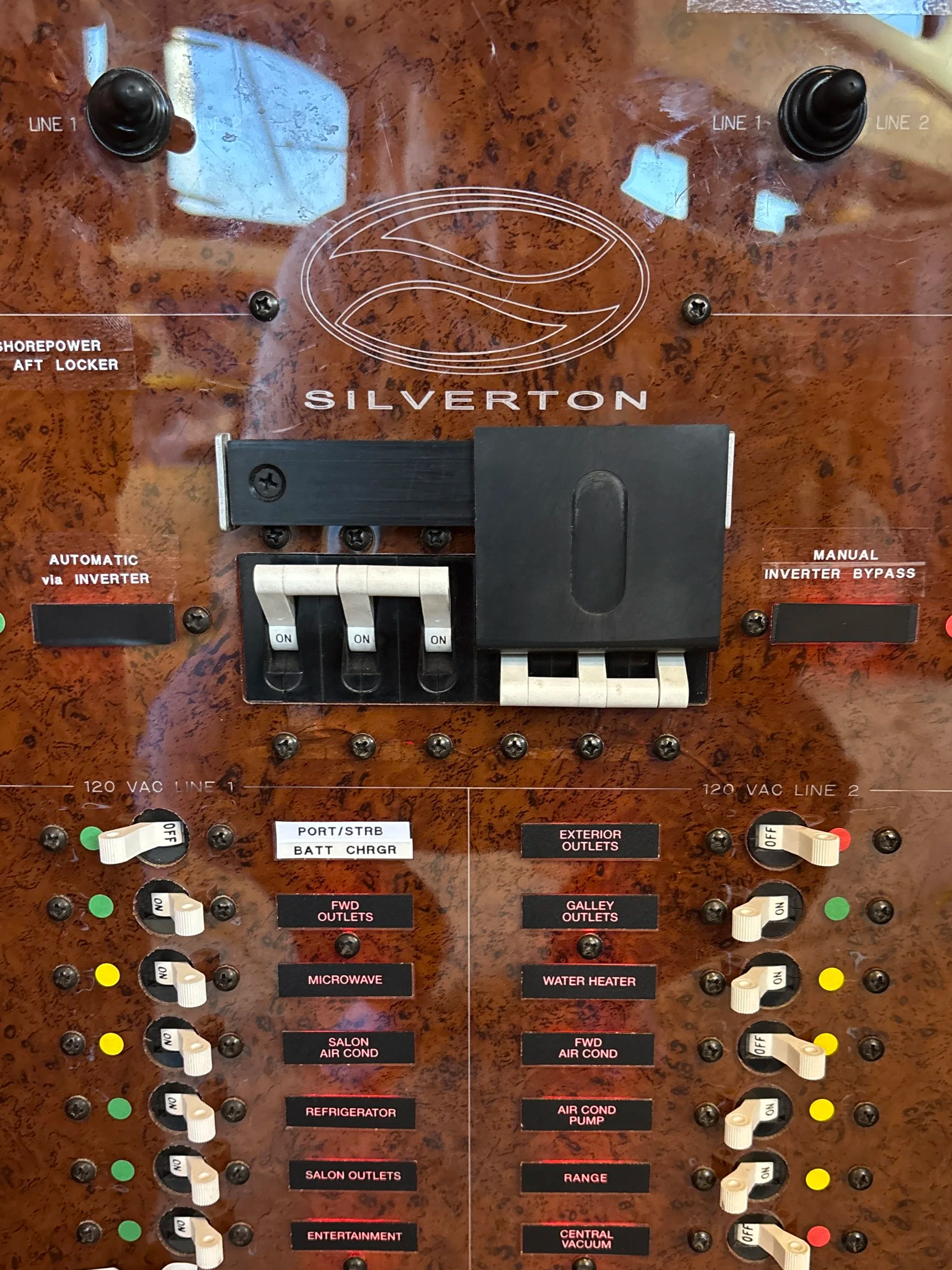
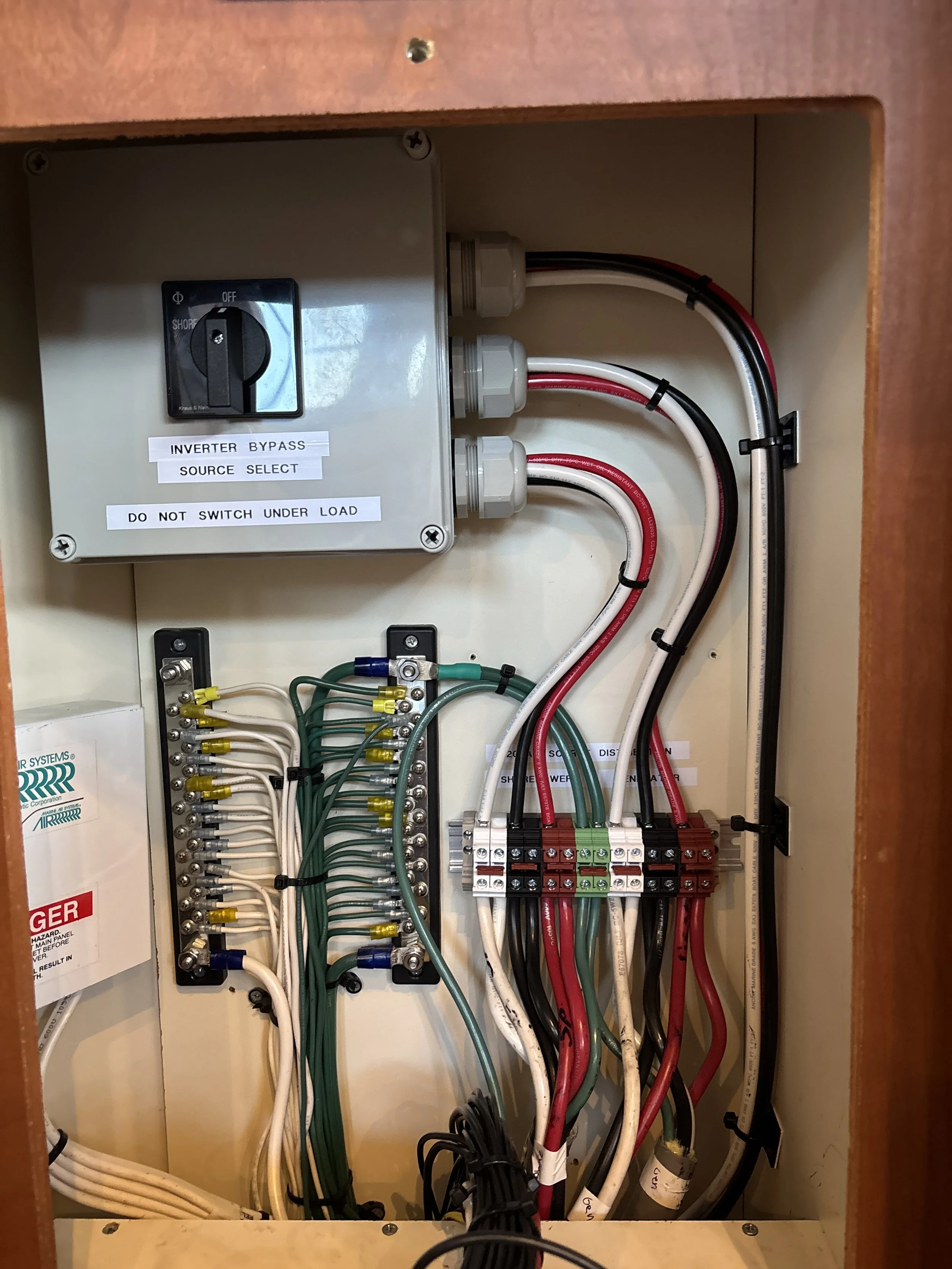
Since all 120v AC loads are now dependent on the operation of the Quattro, installation of the manual inverter bypass was essential. Operation in the event of an inverter failure is simple: Open the ‘Automatic via Inverter’ breaker to disconnect the inverter and close the ‘Manual Inverter Bypass’ breaker. By default the source is from the generator, but can be switched back to shorepower once safely on the dock. The inverter can then be disconnected and serviced while still ensuring reliable power from either 120v AC source.
Automate the Gen
With all of the 120v AC loads going through the Quattro, the key to protecting the battery bank from excess discharge was to integrate and automate the generator control into the Cerbo Gx. With the generator output wired to the Quattro’s transfer switch and the automation available in the Cerbo Gx control unit, this was actually pretty easy. The hardest part was wiring up two timed relays for generator start and generator stop (insert relay photo). This took a little trial and error, but ultimately we got it working reliably. The generator now automatically starts if the battery level gets too low, inverter load gets too high, or proactively every evening to top off the batteries so the generator doesn’t start overnight. The additional feature of seamless transfer and timed warm up/cool down helps protect the generator. The additional load from the more powerful charger better loads up the generator.
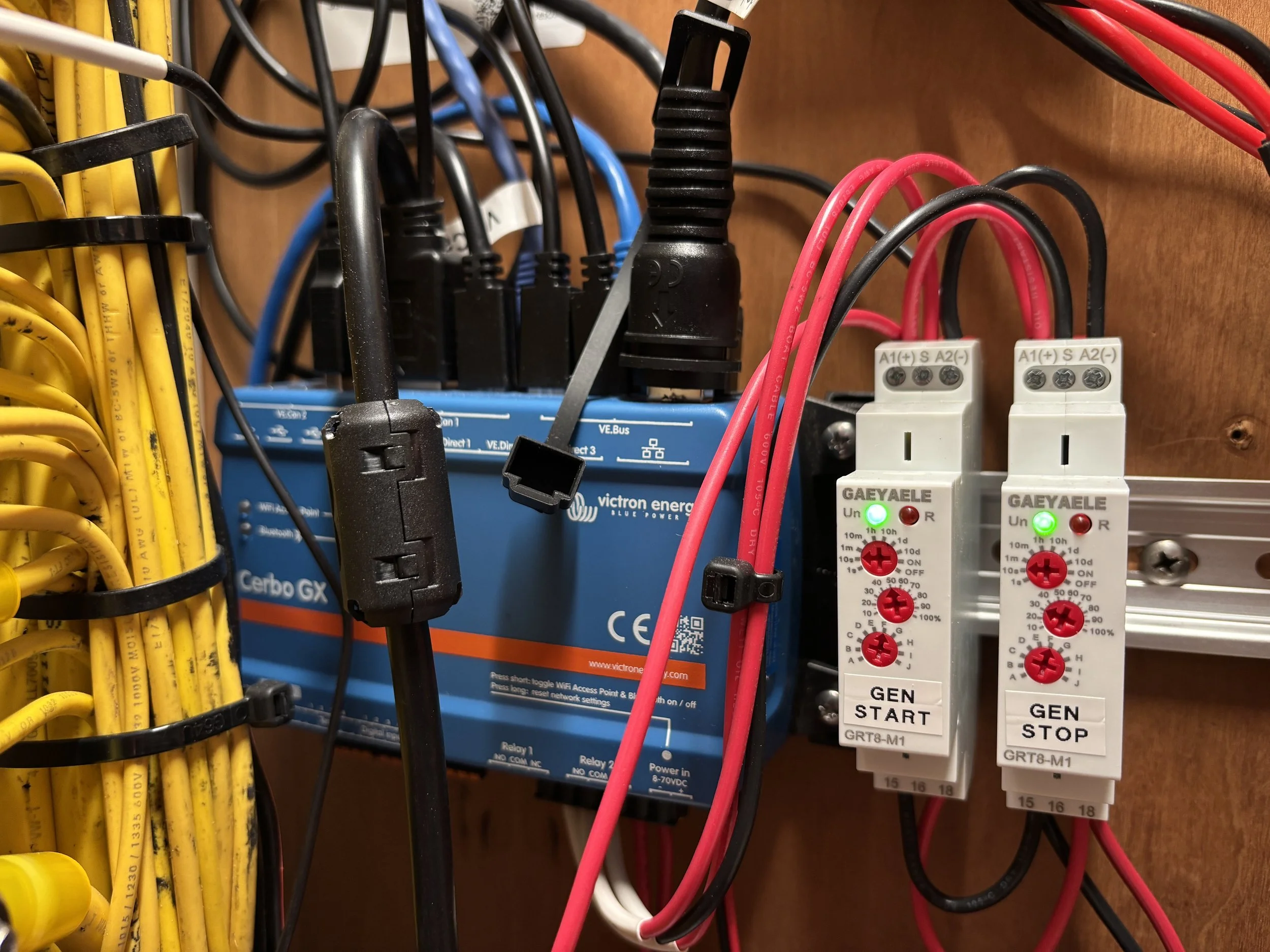
Gen Start/Stop timed relays connected to Cerbo Gx. Click for pdf diagram.
The combination of continuous and uninterrupted 120v AC power combined with Starlink and connectivity anywhere and everywhere is a complete game changer. It transforms the boat.
Stop Wasting Free Electricity
One of the weakest points with Sea of Memories was the underutilization of the available alternator power. Despite being equipped with 2, Cummins 370 6BTA engines with 105A alternators each, one wasn’t connected to the house bank and the other was not being fully utilized. The port engine’s alternator and battery bank was connected to the house battery bank via a simple Automatic Charging Relay (ACR). Unfortunately, this relay doesn’t have the ability to boost the necessary charge voltage to reach absorption voltage or regulate charging characteristic of the alternator to prevent overcharging or prevent overloading the alternator after a deep discharge of the house bank. The latter was the biggest concern with the new Quattro installation. We did not want to burn up an alternator. We also didn’t like that the current system was leaving electricity from the starboard engine on the table.
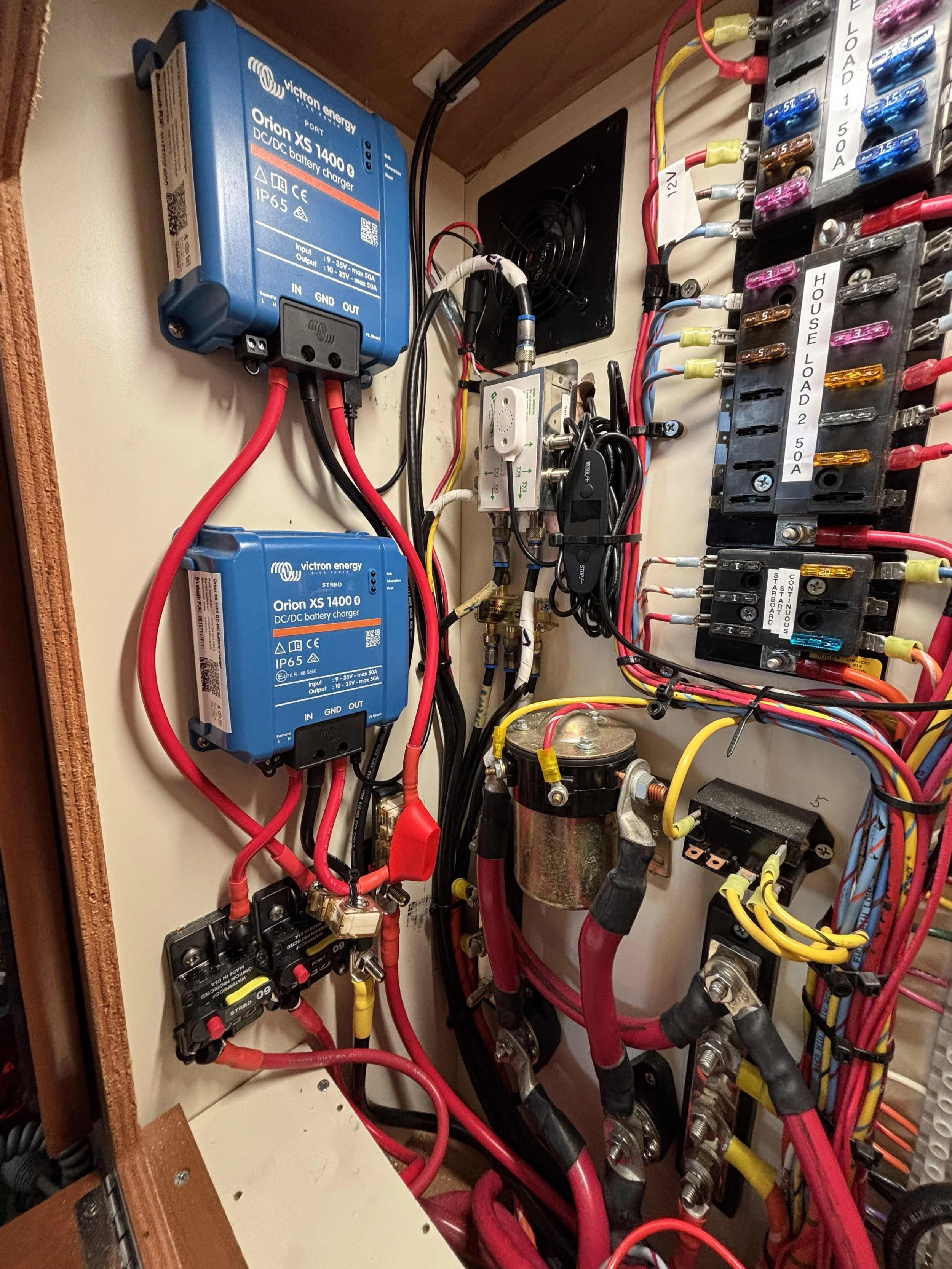
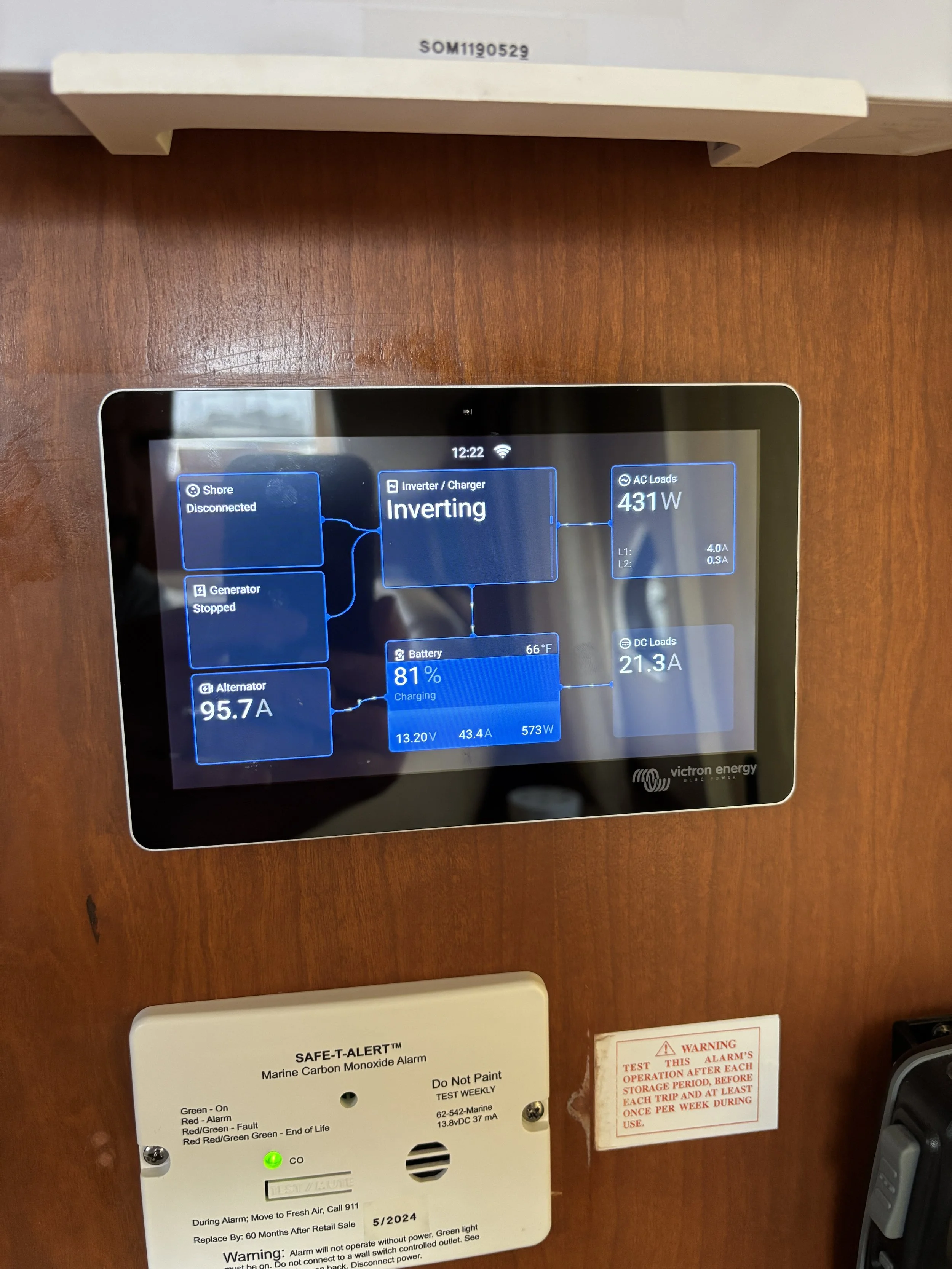
PowerAssist is incredible - the ability to enjoy the benefits of 50A shorepower anywhere and eliminate those annoying cold morning breaker trips alone makes this system completely worth it. Even if we never left the dock!
We removed the ACR and installed 2, Victron Orion XS1400 50 amp DC-DC chargers. These chargers each connect to their respective port and starboard battery banks to utilize both 105A alternators to charge the house bank. These chargers network together through Victron’s DVCC system to work together as along with the Inverter/Charger to maximize charge rate. Most importantly, these chargers will never exceed the limits of the alternators, can boost the charge voltage to reach absorption, and will ramp down when the house bank is fully charged. Most importantly, both engine’s alternators are now providing charge, distributing the load evenly and providing additional redundancy and reliability in case one alternator fails or there is an issue running one of the engines.
Fully Integrated Monitoring
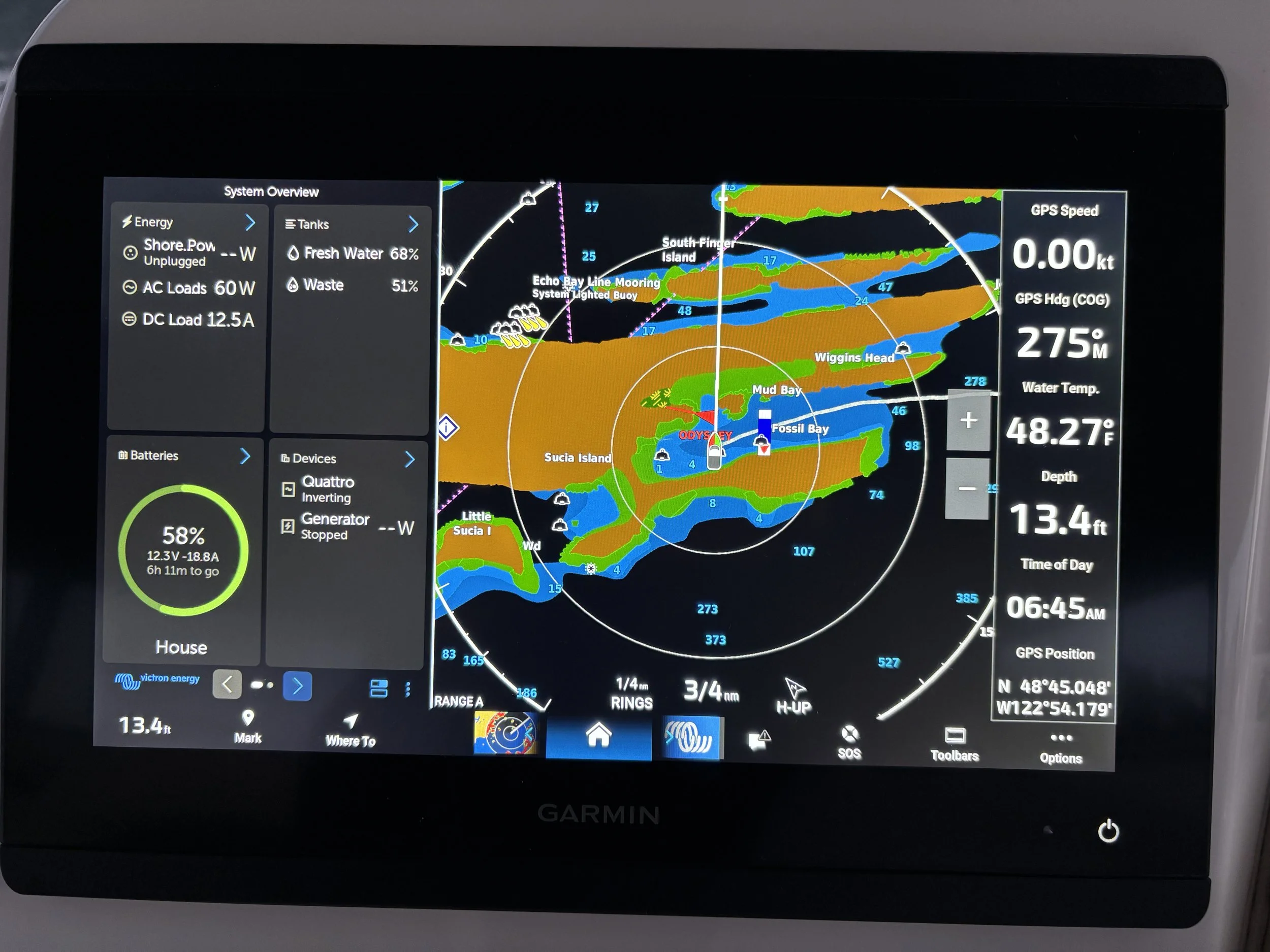
The ability to monitor and control the system, from anywhere on the vessel, was an important feature of the system. A large touchscreen was installed in the salon to serve as the primary monitor and controller for the whole system. This integrated monitoring and control into the primary living space. For convenient monitoring, a wireless display was installed in the primary stateroom. This allows for checking battery levels overnight or even starting the generator. For complete monitoring and control underway, the system was also integrated into the Garmin chartplotter on the flybridge. Finally, remote monitoring via the ship’s onboard Starlink allows for remote troubleshooting.
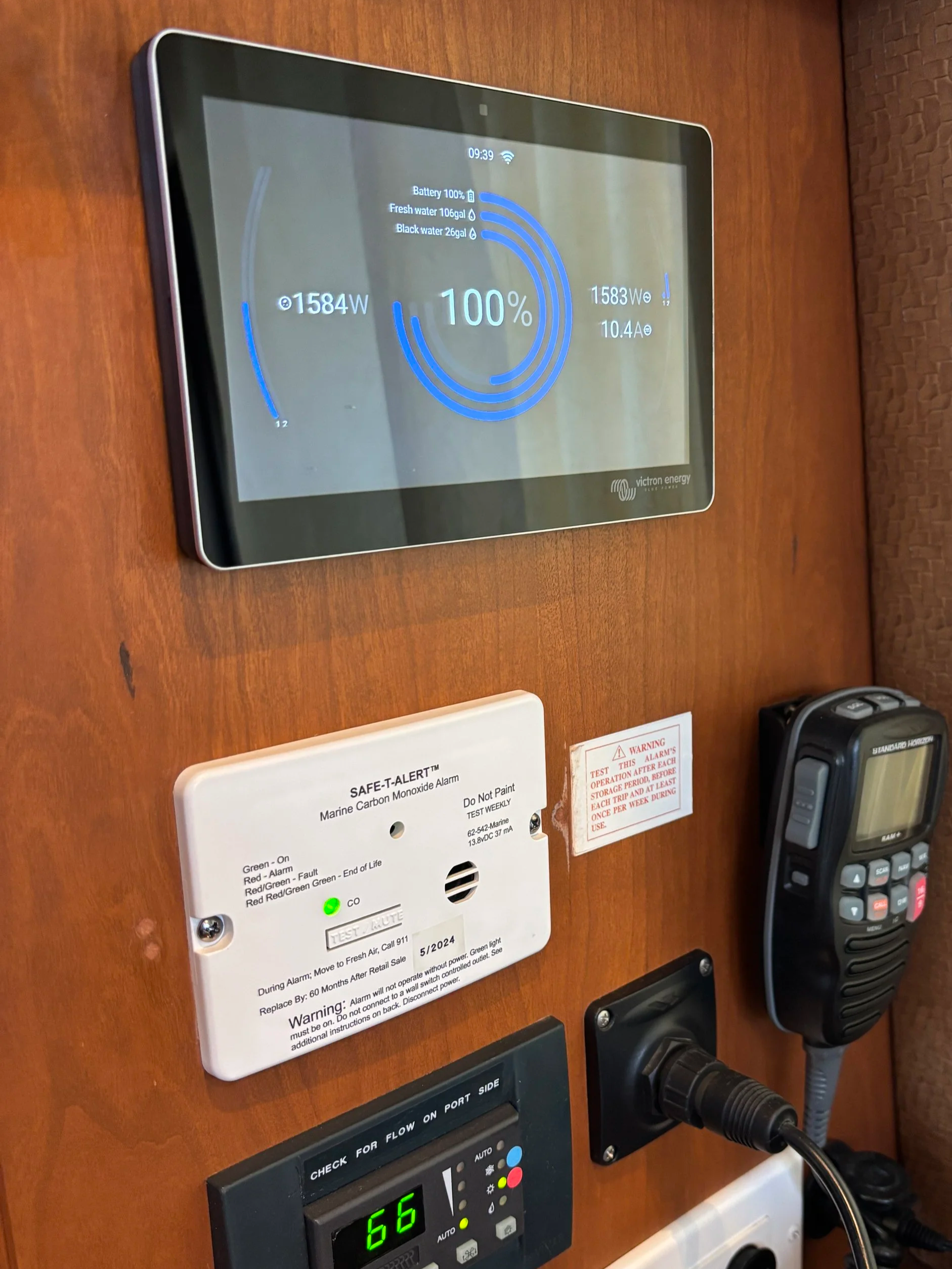
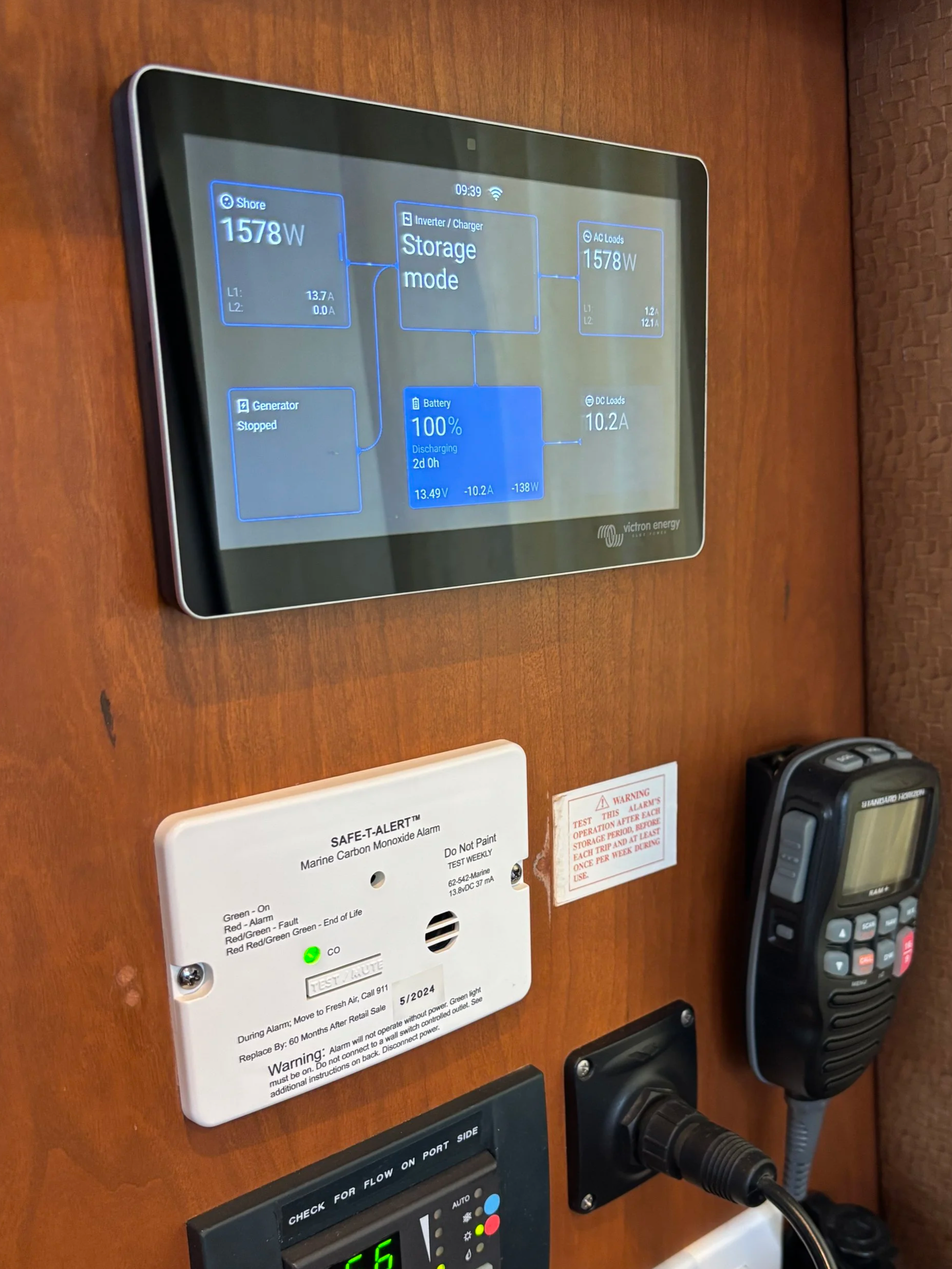
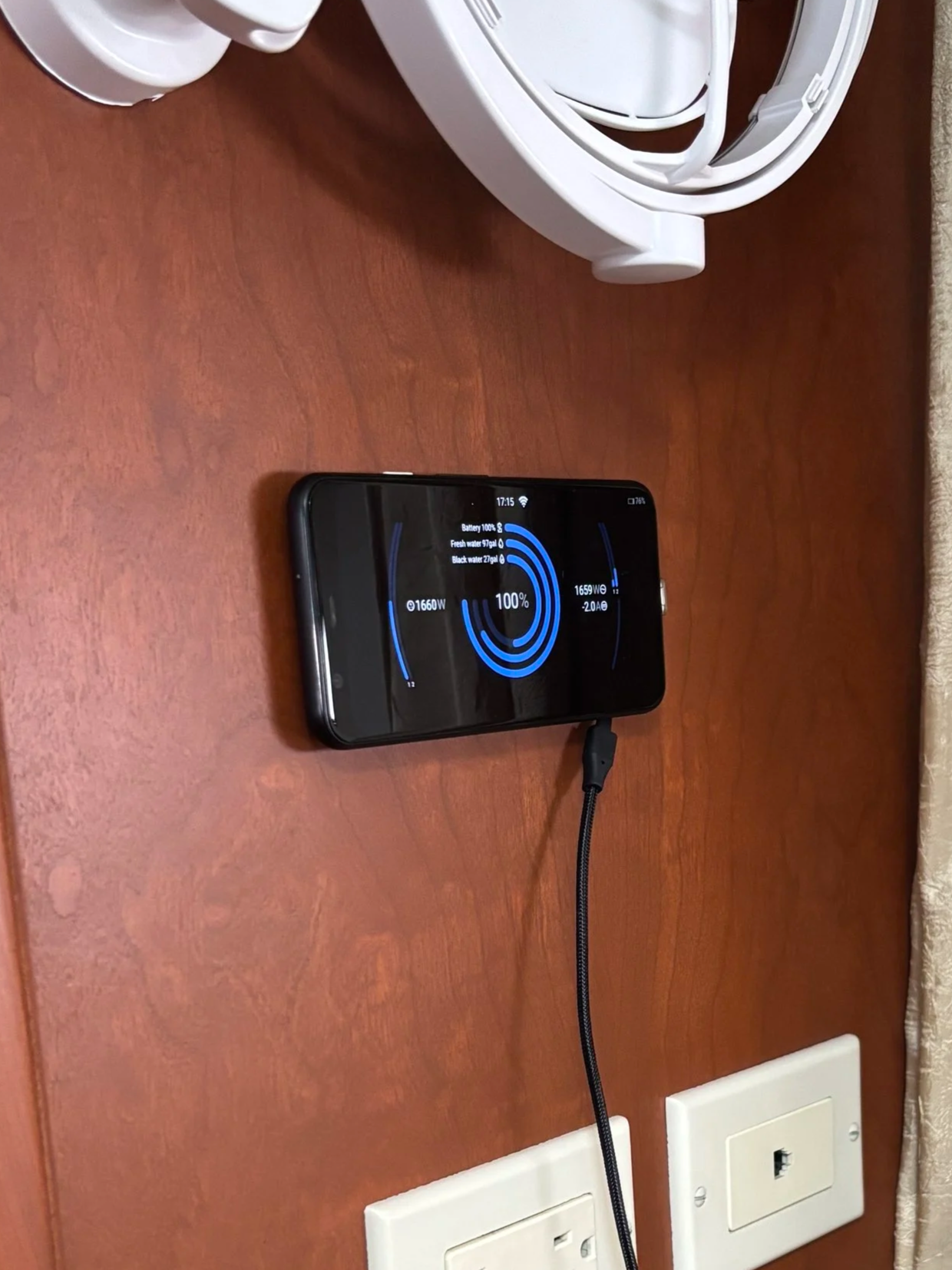
Integrating a 2006-era 8 kW gen set was surprisingly easy and resulted in huge benefits. The ability to control the generator with any automation we can think of and take advantage of seamless transfers, makes it feel like home and ensures protection of the house battery bank.
Initial Startup and Testing
After about 5 months of install time and a 13 page detailed installation and commissioning plan, we were ready to fire up the system. We carefully moved through system startup energizing all of the systems, programming the system, and checking connections. After initial startup was complete, we load tested the system and temperature checked all connections.
One interesting thing we discovered during commissioning and had to address was that the Quattro was more stable and sensitive than the 8 kW genset. During periods of high load running on the generator, if the HVAC system started, the generator would not maintain voltage and frequency within tolerance of the Quattro. This would cause the Quattro to switch all loads over to inverter and trip it on overload. After playing with a variety of settings and parameters, the installation of a soft starter on the HVAC system reduced the startup load and addressed the issue.
Conclusion
Overall we could not be happier with how the install turned out and how the system performs. It’s more capable than we had initially planned and best of all, has plenty of room for additional enhancements and improvements. One of the most impressive features has been how seamless the PowerAssist functionality operates. The system seamlessly ensures shorepower does not exceed 30A. During the winter, mornings typically meant choosing between morning warmup or getting the coffee and breakfast going. Not anymore! With PowerAssist, the house bank provides that juice to get through those brief high load periods and eliminates having to reset a dock breaker on a cold winter morning.
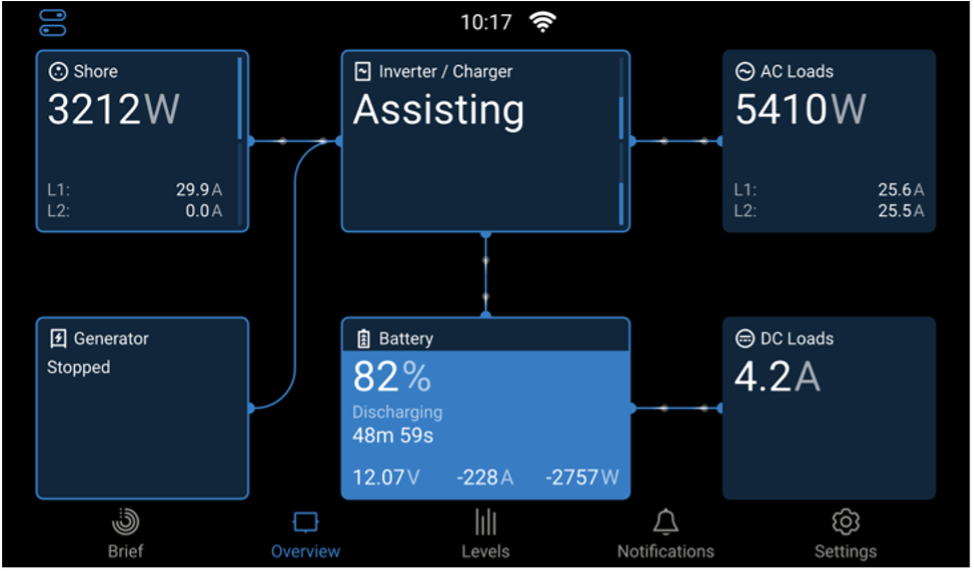
Victron PowerAssist aboard Sea of Memories on full display - 50A of load on 30A shore power. Completely seamless.
Future Enhancements
We’ve already identified some future improvements and enhancements to the system:
Install up to 1200W of solar on the flybridge along with a Victron MPPT. Integrated into the existing DVCC controlled system, would net approximately 80A of 12v DC charging in peak conditions.
Additional automations via Node Red such as using the electric water heater as an energy storage device during peak solar conditions
Upgrade the existing 7.2 kWh AGM battery bank with a ~14 kWh lithium bank. Perhaps move to a 24v house bank (and inverter). The current AGM bank was installed when we purchased Sea of Memories and was upgraded from 5.3 kWh to 7.2 kWh in 2024.
With a future battery upgrade, also upgrade to a future 24v/5kw Quattro-II, assuming Victron comes out with one :)
We hope all of our guests appreciate this system as much as we do. Stay tuned for more news and updates on Sea of Memories.